Standard Beverage Can Height and Dimensions
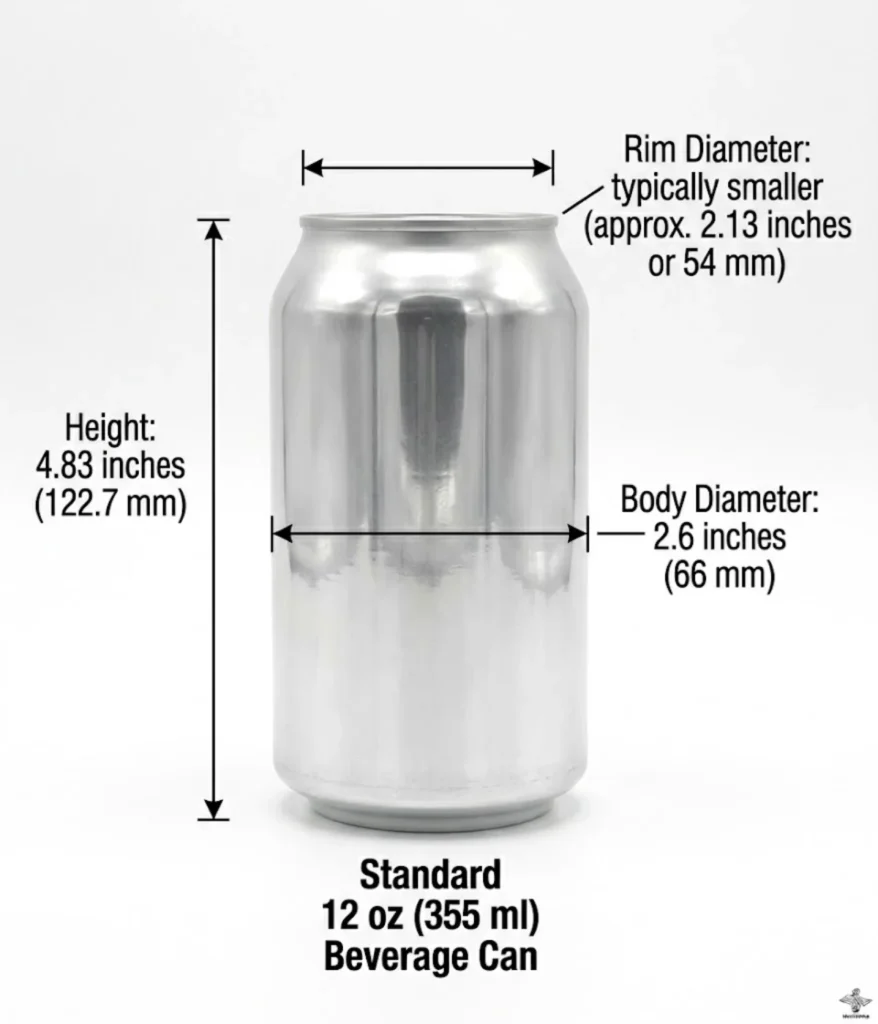
The 12 oz standard beverage can is the most produced aluminum container in the United States. It measures 4.83 inches (122.7 mm) tall with a body diameter of 2.6 inches (66 mm).
One detail most people overlook — the lid diameter is smaller than the body. The can body measures 2.6 inches wide, but the top curl diameter standardizes at 2.340 inches (59.5 mm). Modern cans are made from AA3004/AA3104 aluminum alloy with walls as thin as 0.004 inches — engineered for maximum strength at minimum material weight.
| Dimension | Measurement |
|---|---|
| Height | 4.83 inches (122.7 mm) |
| Body Diameter | 2.6 inches (66 mm) |
| Lid Curl Diameter | 2.340 inches (59.5 mm) |
| Volume | 12 oz / 355 ml |
| End Size | 202 |
| Wall Thickness | ~0.004 inches |
Real-world comparison: A standard 12 oz beverage can stands roughly as tall as a deck of playing cards upright. Its 2.6-inch diameter fits perfectly in every standard car cup holder, koozie, and refrigerator door shelf in America.
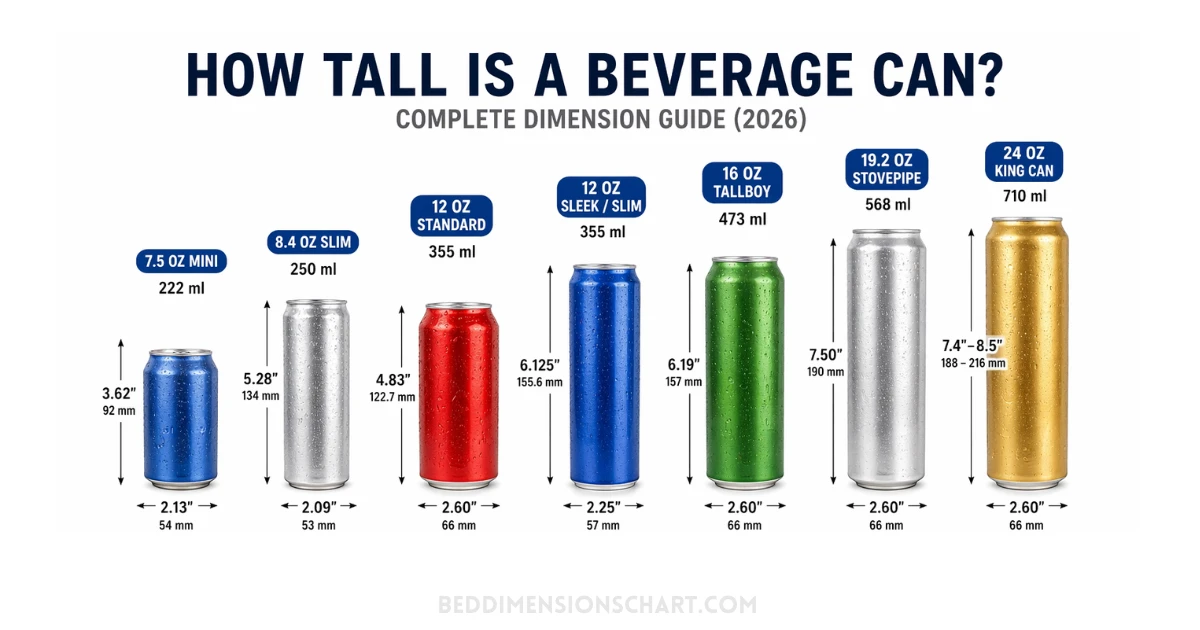
Beverage Can Sizes Chart — Every Format With Height and Diameter
Beverage can dimensions scale with volume — taller and sometimes wider as capacity increases. The industry uses a three-digit code for body diameter — “211” means 2 and 11/16ths inches, and “202” means 2 and 2/16ths inches. Here’s every major US format in one chart.
| Can Type | Height (in) | Height (mm) | Diameter (in) | Volume |
|---|---|---|---|---|
| 7.5 oz Mini | 3.62 in | 92 mm | 2.13 in | 222 ml |
| 8.4 oz Slim | 5.28 in | 134 mm | 2.09 in | 250 ml |
| 12 oz Standard | 4.83 in | 122.7 mm | 2.60 in | 355 ml |
| 12 oz Sleek / Slim | 6.125 in | 155.6 mm | 2.25 in | 355 ml |
| 16 oz Tallboy | 6.19 in | 157 mm | 2.60 in | 473 ml |
| 19.2 oz Stovepipe | 7.50 in | 190 mm | 2.60 in | 568 ml |
| 24 oz King Can | 7.4 – 8.5 in | 188–216 mm | 2.60 in | 710 ml |
Key manufacturing note: The most common body diameter across all standard formats is technically 211 (2.6875 inches) at the widest point — though manufacturers round this to 2.6 inches for consumer-facing specs. Dimensions can vary slightly by manufacturer and filling line.
Mini, Standard, Sleek, and King — Beverage Can Formats Explained
The 7.5 oz Mini Can
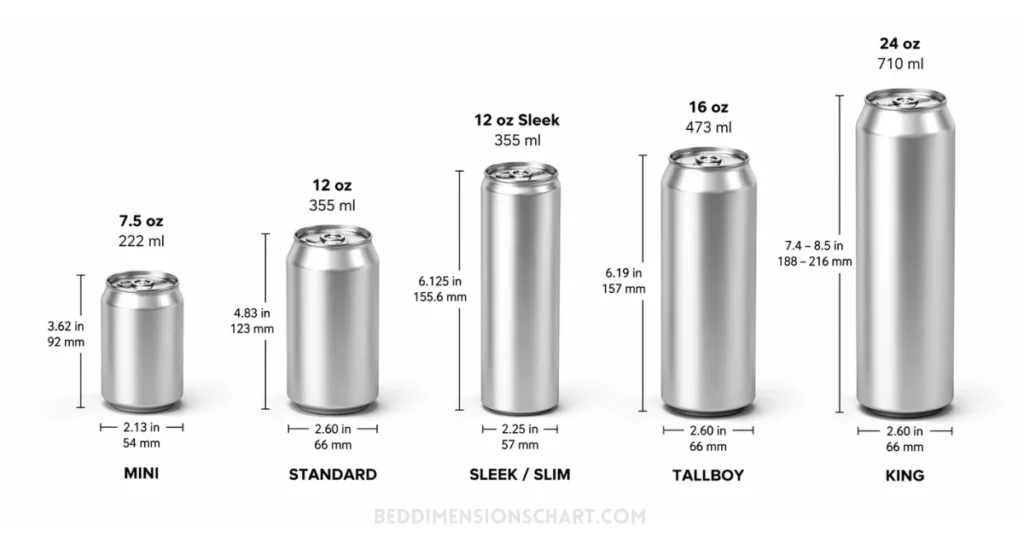
The 7.5 oz mini beverage can stands just 3.62 inches (92 mm) tall with a 2.13-inch diameter — the smallest aluminum can format in mainstream US retail. It holds 222 ml and is designed for portion control, kids’ beverages, airline service, and sampling occasions.
Coca-Cola and Pepsi both sell their flagship sodas in this format. Mini can sales grew over 30% between 2015 and 2020 as health-conscious consumers sought smaller serving sizes at premium pricing.
The 12 oz Standard Can
The 12 oz standard can at 4.83 inches tall accounts for over 60% of all canned beverages sold in the USA. It holds 355 ml, uses a 202 end size, and fits every standard cup holder, cooler rack, and vending machine slot in the country.
This format has remained dimensionally unchanged since the 1960s — a testament to how perfectly engineered its proportions are for manufacturing efficiency, consumer handling, and retail display.
The 12 oz Sleek / Slim Can
Same 355 ml volume as the standard — completely different proportions. The sleek can stands 6.125 inches (155.6 mm) tall at just 2.25 inches wide, creating a noticeably taller and narrower profile that signals premium and modern positioning.
Hard seltzers, energy drinks, and specialty craft beverages dominate this format. The sleek shape delivers 40% more label surface area than a standard 12 oz — critical for brand storytelling in crowded retail coolers.
The 16 oz Tallboy
The 16 oz tallboy measures 6.19 inches (157 mm) tall with the same 2.60-inch diameter as the standard 12 oz. It holds 473 ml — a near-perfect pint serving — and is the dominant format for craft beer, large-format energy drinks, and premium single-serve beverages.
Despite standing over an inch taller than the standard can, the identical diameter allows seamless production line compatibility with minimal changeover time or cost.
The 24 oz King Can
At 7.4 to 8.5 inches tall, the 24 oz king can is the largest standard single-serve aluminum format. It holds 710 ml and keeps the consistent 2.60-inch diameter — only height changes. Popular for value beer, malt liquors, and large-format energy drinks at convenience stores and gas stations.
The significant height variation in this format — up to a full inch difference between manufacturers — reflects the fact that this size lacks the same rigid standardization as the 12 oz and 16 oz formats.
Beverage Can vs. Red Bull Can — Size Comparison
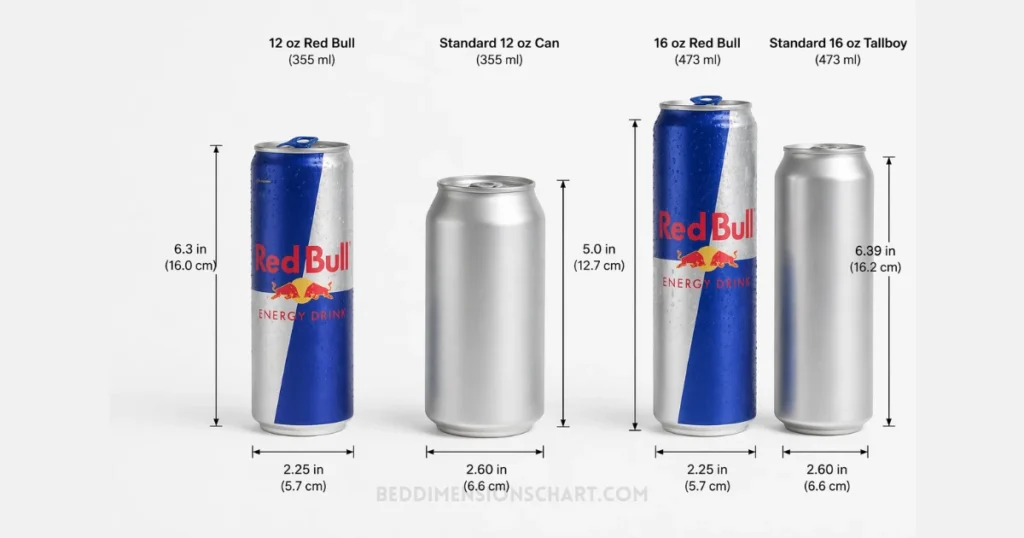
How does a standard beverage can compare to a Red Bull can? Despite both being aluminum, the dimensional differences are striking.
| Format | Height | Diameter | Volume |
|---|---|---|---|
| 12 oz Standard Beverage Can | 4.83 in | 2.60 in | 355 ml |
| 12 oz Red Bull Can | 6.13 in | 2.25 in | 355 ml |
| 16 oz Standard Beverage Can | 6.19 in | 2.60 in | 473 ml |
| 16 oz Red Bull Can | 6.90 in | 2.25 in | 473 ml |
| 8.4 oz Red Bull Can | 5.25 in | 2.25 in | 250 ml |
The 12 oz Red Bull can holds the exact same 355 ml as a standard beverage can — but stands 1.3 inches taller due to its significantly slimmer 2.25-inch diameter. Same liquid, completely different can shape.
The 16 oz Red Bull stands 0.71 inches taller than a standard 16 oz tallboy for the same reason. Red Bull’s signature narrow body pushes height up to maintain volume capacity — a deliberate design choice that created an entirely new slim/sleek can category that the broader beverage industry now follows.
International Beverage Can Sizes — US vs Global Standards
Standard beverage can dimensions differ by region based on metric packaging norms and local drinking culture.
| Region | Standard Size | Height | Notes |
|---|---|---|---|
| USA | 12 oz (355 ml) | 4.83 in | Market dominant format |
| Europe | 330 ml / 500 ml | ~4.7 / 6.3 in | Metric standard |
| UK | 330 ml / 440 ml | ~4.7 / 6.5 in | Both widely available |
| Australia | 375 ml | ~4.9 in | National standard |
| Japan / Asia | 350 ml | ~4.8 in | Regional preference |
Europe’s standard is 330 ml — slightly smaller than the US 355 ml at a marginally shorter height. The UK uses both 330 ml and 440 ml, with the 440 ml format sitting between the US 12 oz and 16 oz sizes. Australia runs its own 375 ml standard that doesn’t directly align with either US or European norms.
Frequently Asked Questions
Beverage can dimension in inches?
A standard 12 oz beverage can measures 4.83 inches tall and 2.60 inches in diameter, with a lid curl diameter of 2.340 inches. These dimensions have been consistent since the 1960s across all major US beverage brands.
What is the size of a standard drink can?
The standard drink can in the USA is 12 oz (355 ml) — 4.83 inches tall and 2.60 inches in diameter, using a 202 end size. This format represents over 60% of all canned beverages sold in the US market.
What are the dimensions of a 12 oz beverage can?
A 12 oz beverage can stands 4.83 inches (122.7 mm) tall with a 2.60-inch (66 mm) body diameter and a 2.340-inch (59.5 mm) lid curl diameter, holding 355 ml of liquid.
What is the typical size of a soda can?
The typical soda can in the USA is the 12 oz standard — 4.83 inches tall and 2.60 inches wide — holding 355 ml. Coca-Cola, Pepsi, Dr Pepper, and virtually every major soda brand use this exact format as their primary retail container.
Conclusion
How tall is a beverage can? The standard 12 oz stands at 4.83 inches — but formats range from the 3.62-inch mini all the way to the 8.5-inch king can.
Every beverage can dimension is precision-engineered — from the 0.004-inch aluminum walls to the standardized 2.340-inch lid curl — balancing material efficiency, production speed, and consumer handling. Whether you’re planning cooler space, designing packaging, or just settling a curiosity, now you have every measurement in one place.

Hi, I’m John Smith, the admin at BedDimensionsChart.com. I make measurements simple and easy to understand, from bed sizes to everyday length conversions. Clear guides. Accurate dimensions. No confusion.